2026-10-19 ·
Why Your Dryer Takes Longer In Chicago Winters
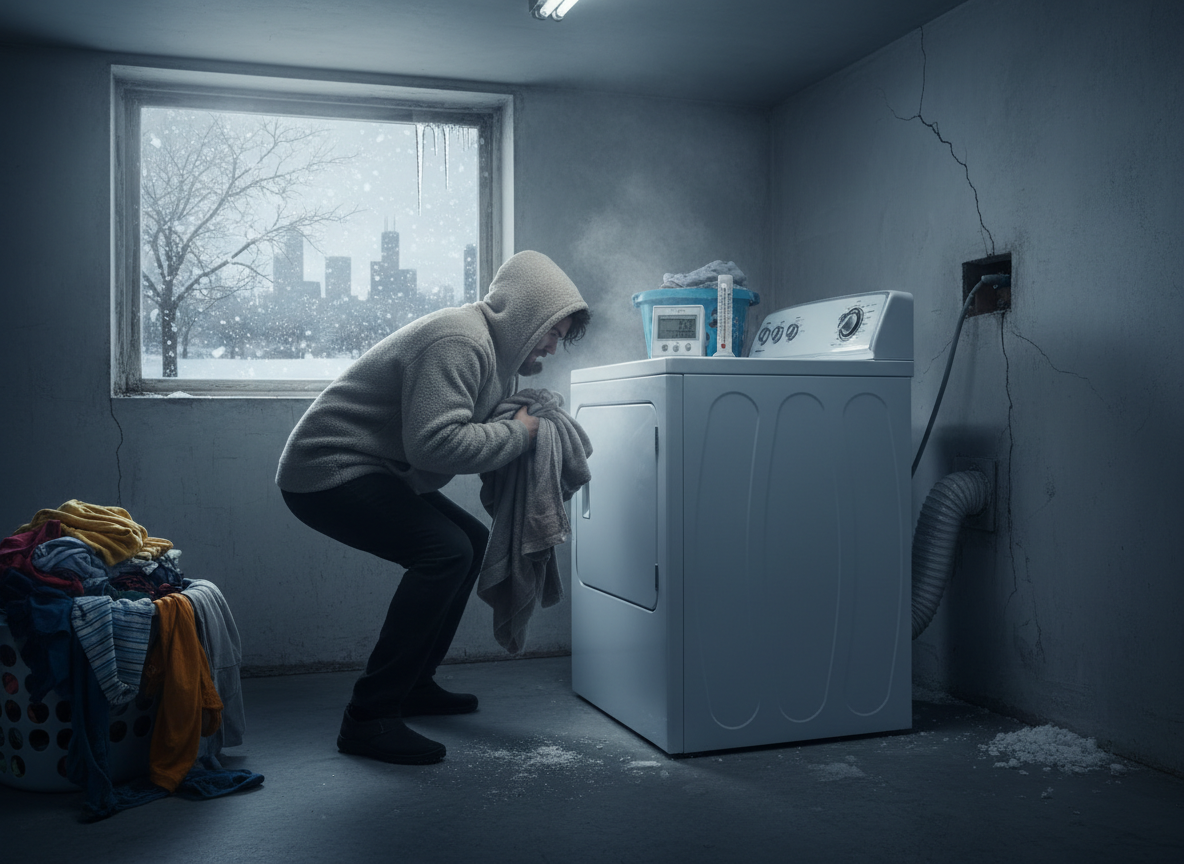
Chicago winters make dryer cycles run longer because the cold, dense air pulled into the machine must be heated from much lower starting temperatures while the exhaust system fights greater temperature differentials against the outside air.
Winter Air Density and Moisture Removal in Cook County
The humid continental climate brings sharp drops that pack more air molecules into every cubic foot entering the dryer. This denser intake requires extra energy to reach the 140-degree-plus temperatures needed for evaporation, stretching run times in homes throughout Lincoln Park and Wicker Park. Older single-family houses and two-flats common in these areas often have undersized or partially blocked exterior vents that compound the issue when temperatures stay below freezing for days. Residents in Lakeview and Uptown notice the same pattern because many buildings share similar 1920s-era ductwork that was never designed for today's higher-efficiency machines. The result is longer exposure to heat and tumbling, which also increases wear on belts and heating elements during the four-to-five-month stretch of cold weather.
How Pre-War Vents and Exhaust Lines Perform in Cold
Many Chicago buildings from the early 1900s still route dryer exhaust through shared chimneys or narrow metal pipes that run along exterior walls. When outside temperatures plunge, these lines cool rapidly, causing moisture to condense inside the duct before it exits. That condensation creates partial blockages and forces the dryer to push against higher static pressure for the entire cycle. Homeowners in Logan Square and West Loop see this most often because the dense housing stock leaves little room for modern straight-shot venting. The same cold also stiffens flexible transition hoses, creating small kinks that further restrict airflow. Checking the full length of the vent run from the back of the machine to the exterior wall once each fall prevents the gradual buildup that turns a normal 45-minute load into an hour-plus affair by mid-January.
Increased Indoor Drying Loads During Cold Months
When temperatures stay low, residents run more loads because outdoor clotheslines are unusable and families spend more time indoors. This higher volume keeps the dryer operating continuously, which prevents the machine from cooling completely between cycles and changes how the thermostat cycles on and off. In Bridgeport and Pilsen, where many households share laundry rooms in multi-unit buildings, the shared vents become saturated with moisture from multiple machines running back-to-back. The cold air outside cannot carry that moisture away as effectively, so back-pressure builds inside the line. Dryer repair technicians who work these neighborhoods routinely find lint traps that were adequate in milder months now overwhelmed by the extra volume and reduced exhaust velocity.
Practical Steps for Shorter Winter Cycles
Clean the lint screen before every load and vacuum the sensor bars on models that have them. Inspect the exterior vent flap monthly to ensure it opens fully when the dryer runs; snow or ice can pin it closed on especially cold days. For homes in Rogers Park or Andersonville with long horizontal runs, consider adding an inline booster fan rated for the duct diameter. These steps address the physical realities of Chicago's climate without requiring new equipment. When cycles still stretch beyond normal, the issue usually traces to the vent path rather than the dryer itself, which is why checking the full route from machine to outside wall remains the first diagnostic step for any technician serving South Loop or Hyde Park addresses.
When to Schedule Service in Evanston or Oak Park
If basic vent cleaning does not restore normal times, the heating element or moisture sensor may be failing under the added winter load. Dryer repair in nearby Evanston follows the same patterns because the climate and housing stock mirror Chicago's. Readers dealing with repeated long cycles can also review How To Check A Leaking Dishwasher In Pre-War Chicago Apartments for related advice on aging building systems that affect multiple appliances. Consistent attention to the exhaust path keeps winter drying times closer to summer performance across Cook County.