2026-10-19 ·
Refrigerator Maintenance Tips For Humid Chicago Summers
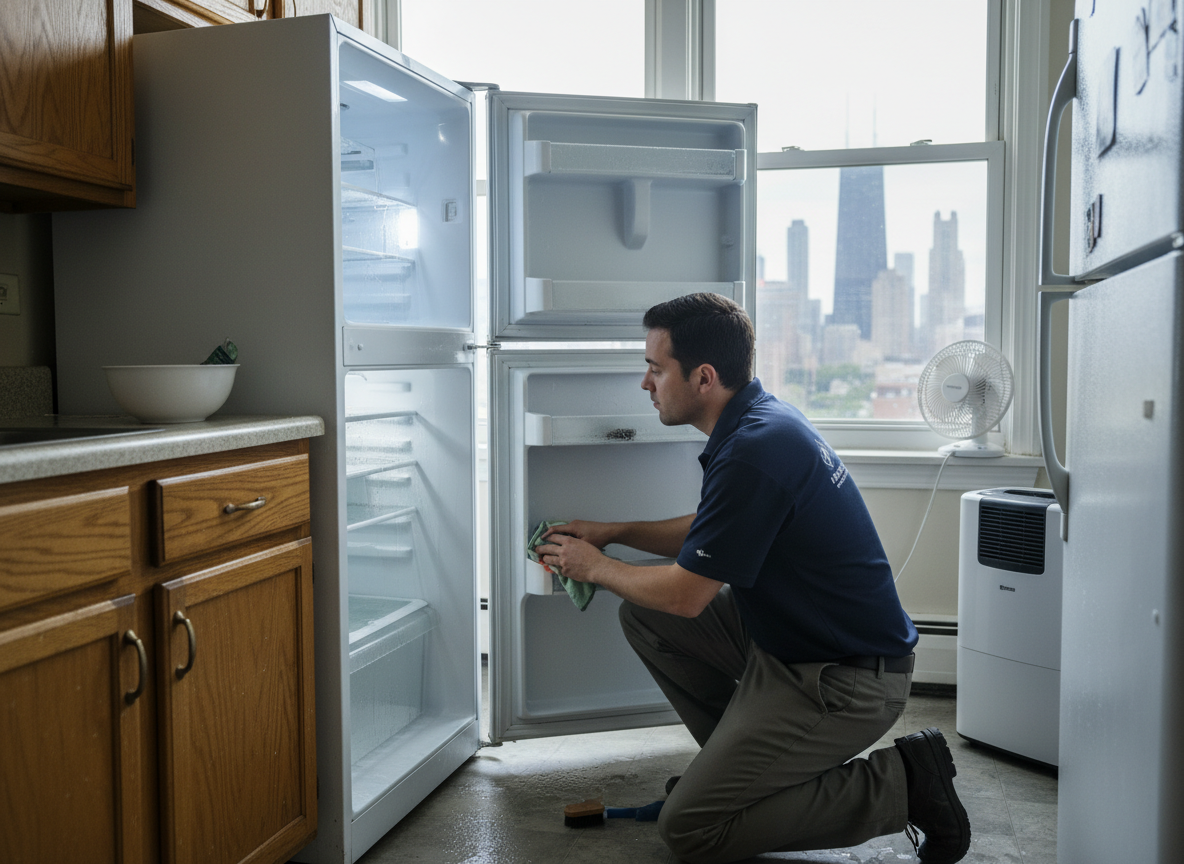
In Chicago's humid summers, clean condenser coils every three months and inspect door gaskets monthly to limit condensation buildup that drives up energy costs and shortens compressor life in older Cook County homes.
How Chicago Humidity Impacts Refrigerators
Chicago's humid continental climate brings hot, moist air from May through September that forces refrigerators to work harder against constant moisture infiltration. In neighborhoods such as Lincoln Park, Wicker Park, and Hyde Park, many pre-war apartments and two-flats house units installed in tight kitchens with limited airflow around the appliance. This setup allows warm, damp air to reach the coils more easily, creating frost on evaporator surfaces and water droplets on interior walls. Residents in Lakeview and Logan Square often notice higher utility bills when summer humidity exceeds 70 percent because the compressor runs longer cycles. Soil conditions around older foundations can also raise basement humidity levels that migrate upward, adding another load on the appliance. Proper placement away from stoves and direct sunlight becomes critical in these compact layouts.
Cleaning Coils and Removing Dust
Dust and lint accumulate faster on condenser coils during humid months when windows stay open near busy streets in the West Loop and South Loop. Unplug the unit, pull it away from the wall, and use a coil brush followed by a vacuum with a crevice tool to clear debris from the bottom or rear coils. Perform this task at the start of June and again in mid-August to maintain airflow and prevent the compressor from overheating. In Rogers Park and Uptown buildings with older electrical systems, keeping coils clean also reduces the chance of tripped breakers during peak summer demand. Homeowners near the Chicago Riverwalk report that units in units facing the water see even quicker buildup due to higher ambient moisture.
Checking and Replacing Door Seals
Door gaskets on refrigerators in Chicago's older stock often harden or crack after 8–12 years of exposure to temperature swings between humid summers and cold winters. Close the door on a dollar bill at several points around the perimeter; if the bill slides out easily, the seal needs cleaning or replacement. Wipe gaskets weekly with a mild baking-soda solution to remove sticky residue that attracts mold in high-humidity conditions common to Bridgeport and Pilsen kitchens. For units in Andersonville or Uptown co-ops, check the magnetic strip for warping caused by repeated door slams in narrow galley layouts. Refrigerator repair becomes necessary when seals no longer maintain an airtight closure after cleaning.
Managing Interior Moisture and Temperature
Set the refrigerator to 37°F and the freezer to 0°F, then monitor with an appliance thermometer during July and August spikes. Place an open box of baking soda inside to absorb excess humidity that enters every time the door opens in busy households. Avoid storing uncovered liquids that add to internal moisture levels, especially in smaller units common to Logan Square walk-ups. When humidity climbs, limit door openings by planning meals ahead, which reduces frost formation on the evaporator. Residents in nearby Evanston often combine this habit with checking the defrost drain for clogs that cause water to pool at the bottom of the fridge.
Knowing When Professional Service Helps
Persistent condensation, unusual compressor noises, or temperature fluctuations that continue after basic cleaning point to issues best addressed by a technician familiar with Chicago housing. Freezer repair may be required if frost builds despite clean coils, while related moisture problems in the kitchen can be cross-checked against guidance in How To Check A Leaking Dishwasher In Pre-War Chicago Apartments. Technicians serving areas from Oak Park to the South Loop understand how older wiring and tight mechanical spaces affect repair approaches. Apex Appliance Repair maintains availability Mon–Sun 24/7 for these seasonal calls.